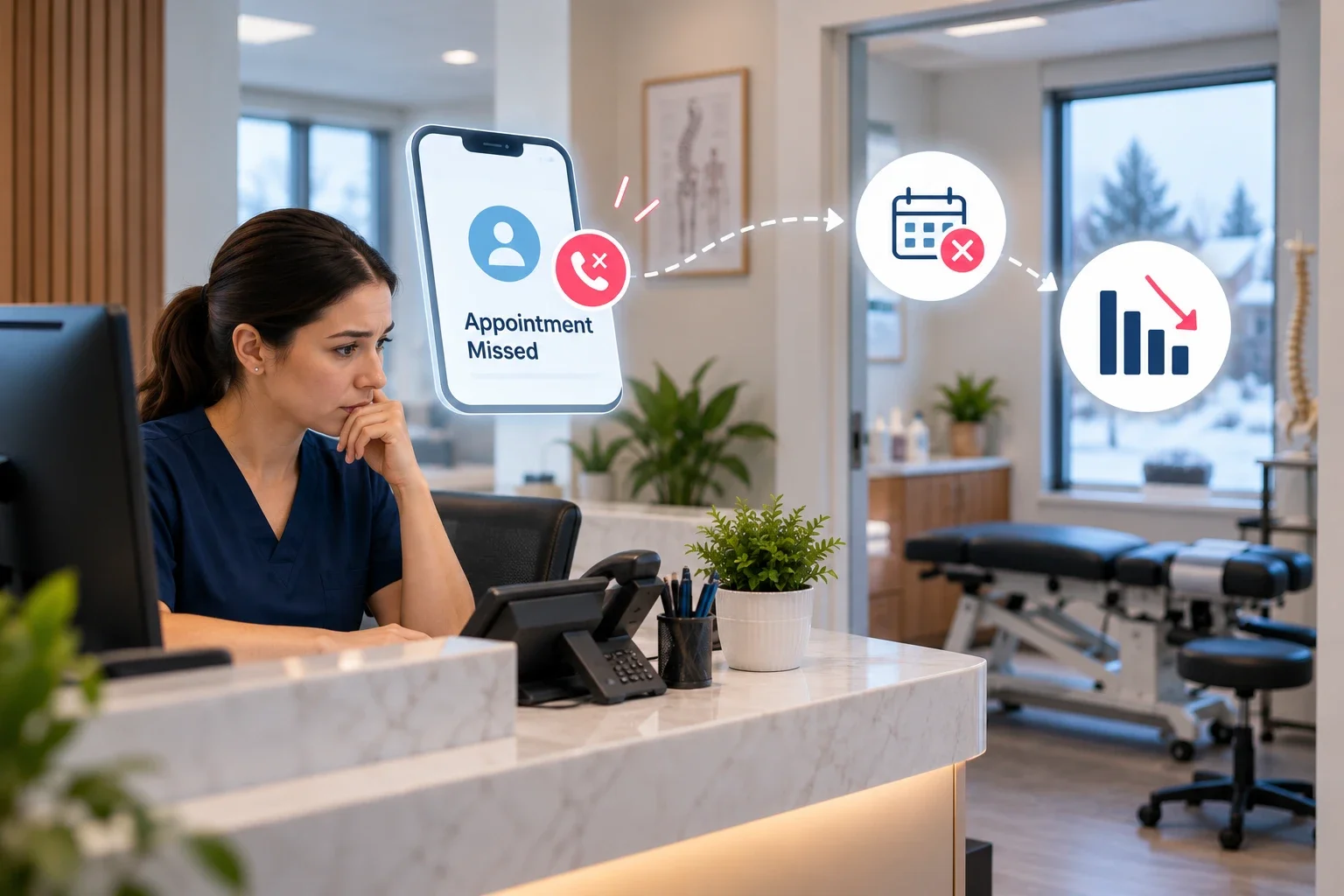
A missed chiropractic appointment costs far more than one visit fee. The empty slot is the part you can see. The real loss is the block of care-plan visits, rebookings, and referrals that stop when a patient falls out of rhythm.
Key Facts
- A single no-show costs the visit revenue plus the future value of the care plan the patient skips next.
- Healthcare no-show rates run roughly 5% to 30% depending on the practice and setting.
- A clinic averaging 8 no-shows a week at a $65 visit value loses about $26,000 a year in direct revenue, before rebooking gaps (example math).
- Most no-shows trace back to forgotten appointments, missed reminders, and calls that go unanswered, not patients who decided to quit.
- Text reminders, missed-call text-back, and automated recall cut no-show rates without adding front-desk work.
What does a missed chiropractic appointment cost?
A missed chiropractic appointment costs the price of the visit plus the future value of the treatment plan that stalls when a patient drops off. The visit fee is the obvious loss. The larger one is the string of follow-up visits that never gets booked because the patient lost momentum.
Here is a simple way to size it. For one no-show, add up:
- The visit fee you would have collected (co-pay plus reimbursement, or the cash rate).
- The empty slot a waitlisted patient could have filled.
- The follow-up visits in the care plan that slip when the patient falls off schedule.
- The staff time spent chasing the reschedule.
A chiropractic visit commonly runs between $30 and $200 depending on services and payer mix. Even at the low end, a few empty slots a week add up fast.
To put numbers on it, here is an example using round figures:
| Input | Example value |
|---|---|
| Average visit value | $65 |
| No-shows per week | 8 |
| Direct loss per week | $520 |
| Direct loss per year (50 weeks) | ~$26,000 |
Those inputs are illustrative. Swap in your own average visit value and weekly no-show count to get a figure that fits your practice.
How much do no-shows add up to over a year?
Across a year, a steady no-show rate can drain tens of thousands of dollars from a single-location chiropractic clinic. The weekly loss looks small, which is exactly why the annual total catches owners off guard.
The reason the yearly figure surprises people is compounding. A no-show is rarely a one-off. When a patient misses visit three of a twelve-visit plan and never reschedules, you lose nine more visits, not one. Multiply that across every provider on your schedule and the gap widens.
A few factors change the total for your clinic:
- Care-plan length. Longer plans mean each drop-off costs more.
- Payer mix. Cash and higher-reimbursement visits raise the per-slot loss.
- Schedule density. A full book with a waitlist recovers some slots; a thin book does not.
If you track only the visit fee, you undercount the damage. The essential CRM features that help your clinic grow include reporting that ties missed visits back to lost plan revenue, so the number stops hiding on a spreadsheet.
Why do chiropractic patients miss appointments?
Most chiropractic no-shows come from forgotten appointments, reminders that never land, and clinics that cannot answer the phone when a patient calls to reschedule. Few are patients who decided not to come back.
The common causes, roughly in order:
- The patient forgot, because no reminder reached them or it landed in a channel they ignore.
- Life got in the way and they could not reach anyone to reschedule in time.
- They called during a busy stretch, hit voicemail, and gave up. A large share of inbound calls to clinics go unanswered.
- The booking felt low-stakes because nothing confirmed that it mattered.
Notice the pattern. Most of these are communication gaps, not commitment problems. That is good news, because communication gaps get fixed with systems instead of willpower.
When a call goes to voicemail after hours, the rebooking usually goes with it. A unified inbox for medical practices keeps calls, texts, and web messages in one place so a reschedule request does not slip through a crack.
How can chiropractic clinics reduce no-shows?
Chiropractic clinics reduce no-shows by confirming every appointment, reminding patients on the channels they use, and making rescheduling effortless. The practices with the lowest no-show rates automate their reminders and never miss an inbound message.
A practical sequence:
- Send a confirmation the moment a patient books, then reminders 48 hours and 2 hours before the visit.
- Remind by text, not only email. Text open rates beat email by a wide margin.
- Let patients reschedule from the reminder itself, without making a call.
- Answer or text back every missed call, including after hours, so a reschedule is one reply away.
- Recall lapsed patients automatically before they disappear from the care plan.
Most of this runs on a recall and reminder system rather than front-desk memory. If the term is new to you, start with what chiropractic CRM software is and how it tracks a patient across a full care plan.
What role does front-office automation play in cutting no-shows?
Front-office automation cuts no-shows by handling the reminders and missed calls a busy front desk cannot keep up with. It closes the communication gaps where most no-shows start.
HiClinic is a front-office automation platform for clinics. It answers calls with an AI receptionist, books and confirms appointments, texts back missed calls, and recalls patients who are due, without pulling a staff member off the floor. It runs alongside your existing practice management system rather than replacing it, so your charting and billing stay where they are.
For chiropractic practices, the chiropractic front-office tools focus on the moments where visits leak out of the schedule:
- The AI receptionist answers every call, so after-hours reschedules get booked instead of lost.
- Missed-call text-back replies to unanswered calls within seconds.
- Automated recall pulls lapsed patients back before a care plan stalls.
- Appointment reminders and confirmations go out by text on autopilot.
HiClinic handles front-office communication only. It does not chart, diagnose, or bill. Setup takes about 7 days, staff training runs around 30 minutes, and billing is month to month with no long-term contract.
Key takeaways
- A chiropractic no-show costs the visit fee plus the downstream care-plan visits that stop when a patient drops off.
- A clinic with a modest weekly no-show count can lose tens of thousands of dollars a year in direct revenue, before rebooking gaps.
- Most no-shows are communication gaps (missed reminders and unanswered calls), not patients quitting.
- Automated reminders, missed-call text-back, and automated recall close those gaps without adding front-desk work.
See how HiClinic keeps chiropractic schedules full. Book a walkthrough of the chiropractic front-office tools.